

Machining of silicon nitride ceramic component
Machining of silicon nitride ceramic component
Home > Products > Precision Ceramic Machining Components > Machining of silicon nitride ceramic component
Machining of silicon nitride ceramic component
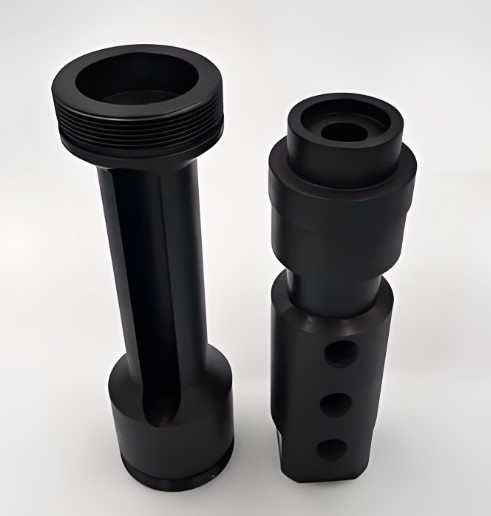
Machining silicon nitride (Si₃N₄) ceramic components is notoriously difficult because of the material’s unique combination of properties. While these same properties make it highly valuable in demanding applications (bearings, turbine parts, semiconductor tooling), they also create significant manufacturing challenges:
1. Extreme Hardness & Tool Wear
Silicon nitride has very high hardness (≈15–20 GPa), which leads to:
Rapid wear of conventional cutting tools
Need for superhard tooling (diamond or CBN)
High tooling cost and frequent replacement
Even diamond tools can degrade due to chemical wear at elevated temperatures.
2. Brittleness & Crack Formation
Despite relatively higher fracture toughness than other ceramics, Si₃N₄ is still brittle compared to metals:
Prone to microcracking, chipping, and catastrophic fracture
Difficult to maintain edge integrity and tight tolerances
Subsurface damage during grinding is common
This is especially critical for precision parts like bearings or seal rings.
3. Low Fracture Strain (No Plastic Deformation)
Unlike metals, silicon nitride does not plastically deform:
Material removal occurs via brittle fracture, not cutting
Requires controlled grinding regimes (ductile-mode machining is very limited)
Surface finish strongly depends on crack control rather than chip formation
4. Thermal Sensitivity & Residual Stress
Although Si₃N₄ has good thermal shock resistance:
Localized heating during machining can induce residual stresses
These stresses may cause delayed cracking or strength degradation
Thermal gradients during grinding must be carefully controlled
5. Need for Diamond Grinding & Polishing
Typical machining route:
Near-net shaping before sintering
Post-sintering: diamond grinding, lapping, polishing
Challenges:
Slow material removal rates
High cost per part
Trade-off between surface quality and productivity
6. Complex Geometry Limitations
Difficult to machine deep holes, sharp internal corners, or thin walls
High risk of breakage during machining
Often requires green machining (before sintering), which introduces shrinkage control issues
7. Cost & Yield Issues
High scrap rates due to cracking
Expensive raw material and processing
Tight process windows → low manufacturing yield
8. Surface Integrity & Reliability
For high-performance applications:
Subsurface damage can reduce strength significantly
Surface defects act as crack initiation sites
Requires additional finishing steps (polishing, etching, HIP)
Practical Solutions / Industry Approaches
Green machining (before sintering) to reduce tool wear
Hot isostatic pressing (HIP) to improve strength and reduce defects
Ultrasonic-assisted machining to reduce cutting forces
Laser-assisted machining (LAM) to locally soften material
Advanced diamond tooling with optimized bond systems
ELID grinding for better surface integrity
Contact us for our decades of experience of Silicon Nitride ceramic components machining for high demanding applications such as semiconductor industry