

Coma News
Community
News
HOME > News
Ceramic Matrix Diamond Composites (CMDC)
A High-Thermal-Conductivity Insulating Material for Advanced Packaging
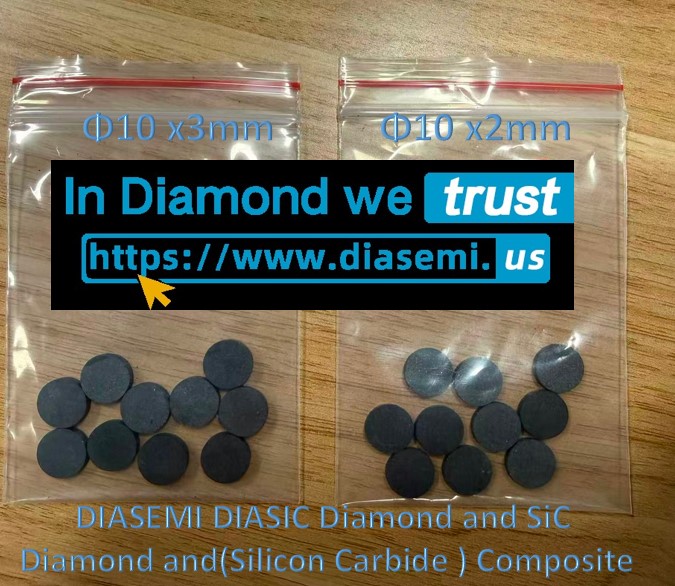
Ceramic Matrix Diamond Composites (CMDC) are emerging as chip-level thermal management materials for next-generation electronic packaging. Structurally, CMDC consists of a ceramic matrix framework (such as SiC or AlN) with uniformly dispersed diamond particles, consolidated into a dense composite through advanced sintering processes.
This hybrid material uniquely combines:
the ultra-high thermal conductivity of diamond, and
the electrical insulation, thermal stability, and low coefficient of thermal expansion (CTE) of ceramics
making it one of the most promising solutions for high heat-flux environments in electronics and aerospace systems.
Interface Engineering: The Key Enabler
A fundamental challenge lies in the poor interfacial bonding between diamond and ceramics due to low wettability. This is addressed through interfacial modification layers, typically including:
Transition metals: Ti, W, Cr, Mo
Carbide-forming layers (e.g., TiC, SiC)
These interlayers serve to:
enhance bonding strength
reduce interfacial thermal resistance
ensure efficient heat transfer from diamond to the ceramic matrix
Without such interface engineering, even dense composites would exhibit severely degraded thermal conductivity.
Application Positioning in Advanced Packaging
CMDC is specifically designed for high-power, high-frequency, and third-generation semiconductor devices (SiC, GaN). It is widely used in:
Chip heat sinks
Packaging substrates
Heat spreaders
It plays a critical role in managing ultra-high heat flux densities in advanced electronic packaging systems.
 Preview
 Next
Next